
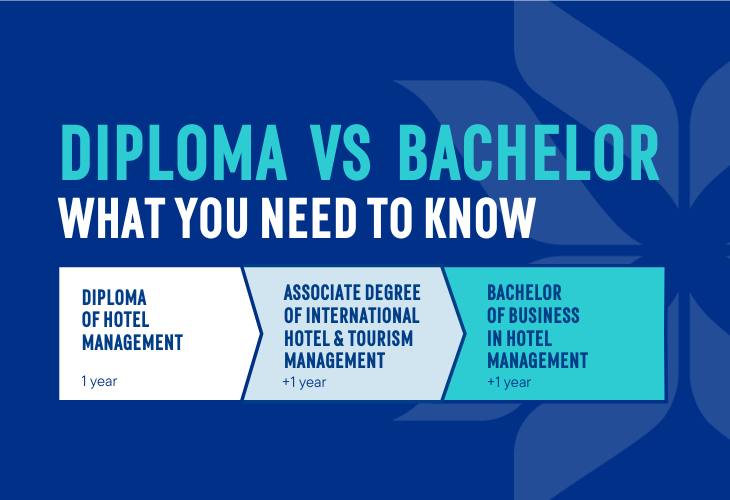
Choosing between a diploma, associate degree, or bachelor degree is a key decision for anyone planning their education or career. Each qualification offers distinct advantages depending on your goals, timeline, and preferred learning style. You may also consider an associate degree, which sits between the two and offers a balanced approach.
What Is a Diploma?
A diploma is a certificate-level course that typically takes one year to complete. It focuses on practical skills and foundational knowledge for entry-level roles in a specific industry.
Example: Diploma of Hotel Management – The Hotel School Australia
This program is designed for those seeking to enter the hotel, tourism, or hospitality sectors quickly. It includes subjects such as:
- Accommodation Operations
- Food & Beverage Operations
- Hospitality Services Management
- Business Communications
- Accounting and Finance for Hotel Operations
- Quantitative Methods with Economics
- Language and Learning in your Discipline
- Foundations of Hospitality
Duration: 1 year full-time or part-time equivalent
Campuses: Brisbane, Melbourne, Sydney, Perth
Start Dates: March, July, October
Career Outcomes: Entry-level supervisory roles in hotels, resorts, and hospitality businesses
Internship: not included
What Is an Associate Degree?
An associate degree is a two-year qualification that sits between a diploma and a bachelor degree. It combines academic study with hands-on industry experience and is ideal for those seeking a more in-depth education than a diploma, but with a shorter time commitment than a bachelor degree.
Example: Associate Degree of International Hotel and Tourism Management – The Hotel School Australia
This course blends theory and practice, preparing students for supervisory roles in hospitality and tourism. It includes 600 hours of paid internships per year, giving students real-world experience and industry exposure.
Core Subjects Include:
- Food & Beverage Operations
- Accommodation Operations
- Hospitality Services Management
- Business Communications
- Marketing Fundamentals
- Accounting and Finance for Hotel Operations
- Tourism Theories and Practices
- Introduction to Conventions and Events
- Professional Development and Practice
Duration: 2 years full-time or part-time equivalent
Campuses: Brisbane, Melbourne, Sydney, Perth
Start Dates: February, June, October
Career Outcomes: Supervisory roles in hotel, leisure, tourism, and hospitality sectors
Pathway Option: Graduates may receive credit for entry into the Bachelor of Business in Hotel Management, allowing them to complete the bachelor degree with one additional year of study.
Internship: 600 hours included (2 subjects)
What Is a Bachelor?
A bachelor degree is a higher education qualification that typically takes three years to complete. It provides comprehensive academic and practical knowledge, preparing graduates for a wide range of career opportunities and leadership roles.
Example: Bachelor of Business in Hotel Management – The Hotel School Australia
This degree combines hotel operations, business management, and industry experience. Students can major in Events, Tourism, or Hospitality, or choose from a range of electives.
Core Units Include:
- Marketing Fundamentals
- Business Communications
- Revenue and Yield Management
- Compliance and Ethics for Hotels
- Professional Hospitality Experience (internship)
- Sustainable Business Practices
- Hospitality Services Management
Duration: 3 years full-time or part-time equivalent
Campuses: Brisbane, Melbourne, Sydney, Perth
Start Dates: March, July, October
Career Outcomes: Management roles in hotels, resorts, cruise lines, tourism organisations, and more.
Internship: 600 hours included (2 subjects)
What’s the Best Option?
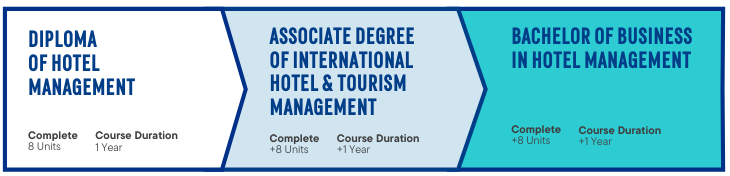
There’s no one-size-fits-all answer. The best choice depends on your career aspirations, personal circumstances, and preferred learning style:
- A diploma suits those seeking quick entry into the workforce or a stepping stone to further study.
- An associate degree offers a balance of academic depth and practical experience, with strong industry integration.
- A bachelor degree is ideal for those aiming for long-term career growth and leadership roles.
Frequently Asked Questions (FAQ)
What is the difference between a diploma and a bachelor degree?
A diploma is typically a one-year course focused on practical skills for entry-level roles, while a bachelor degree is a three-year academic qualification that prepares students for broader career opportunities and leadership positions.
Is a diploma better than a bachelor degree?
It depends on your goals. A diploma is better for quick entry into the workforce and gaining hands-on skills, while a bachelor degree is better for long-term career growth, higher earning potential, and access to senior roles.
Can I upgrade from a diploma to a bachelor degree?
Yes. Many institutions offer pathway options where diploma graduates can receive credit toward a bachelor degree, allowing them to continue their studies without starting from scratch.
What is an associate degree and how does it compare to a diploma and bachelor?
An associate degree is a two-year qualification that offers more depth than a diploma and includes 600 hours of industry experience. It can also serve as a pathway to a bachelor degree, often with credit transfer options.
Which qualification is best for working in hospitality or hotel management?
All three—diploma, associate degree, and bachelor degree—can lead to careers in hospitality. A diploma suits entry-level roles, an associate degree prepares students for supervisory positions, and a bachelor degree opens doors to management and leadership roles. The associate degree and the bachelor degree include an internship so students gain experience and make valuable connections in the industry.
Ready to take the next step? Explore our courses and find the path that matches your goals here.

